

Top 5 Graphics Cards under ₹ 25000
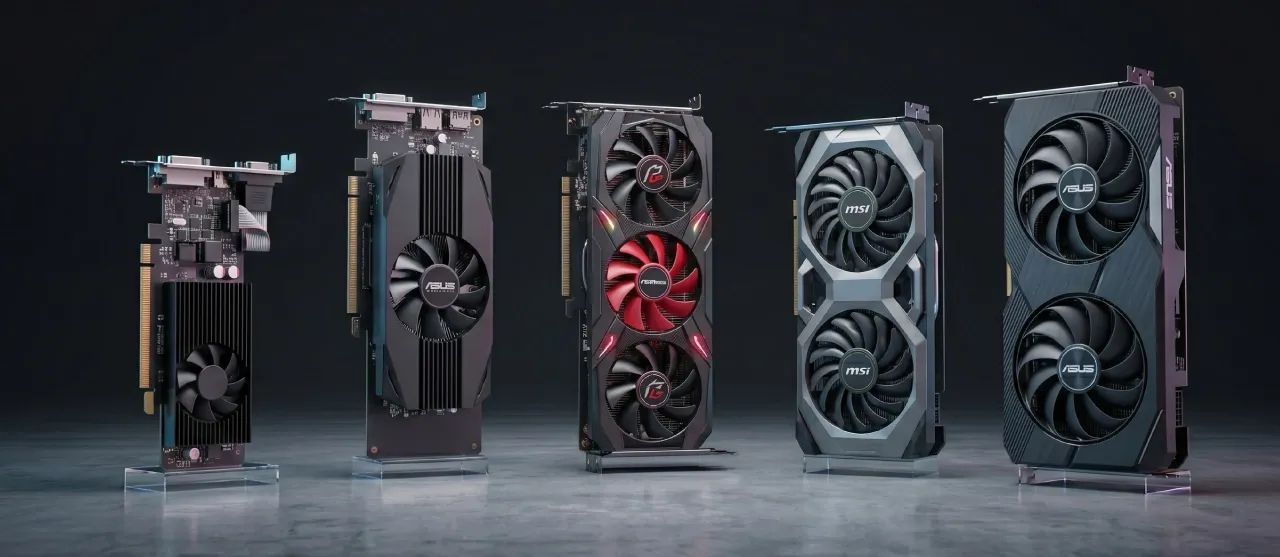
High Frames, Low Spend — 5 Best Graphics Cards Under ₹25,000 for Every Gamer
Building a gaming PC on a budget no longer means settling for integrated graphics or unplayable frame rates. The sub-₹25,000 graphics card market in India has matured significantly, offering genuine 1080p gaming performance, modern feature support like ray tracing and DLSS, and reliable cooling—all without forcing a compromise on your entire build budget. Whether you need a basic display output for a media PC, an eSports powerhouse, a 1080p gaming workhorse, or an entry-level ray tracing card, this guide covers five distinct options. All items are available from InfoTechKart.com with country-wide shipping.
Note: Prices listed are approximate and subject to change. Visit each product page on InfoTechKart for the current selling price and any ongoing offers before ordering.
#1 — MSI GT 710 2GB Graphics Card
Price: ₹3,499 – ₹4,000 | Memory: 2GB DDR3 | Interface: PCIe 2.0 | Best Basic Display & Media PC Solution

The MSI GT 710 occupies a very specific but important role in the GPU market. This is not a gaming card by modern standards, but it is the most cost-effective solution for anyone who needs to get a display output from a CPU that lacks integrated graphics, or for building a silent, low-power home theatre or office PC. At its price, it solves a fundamental problem without any financial friction.
The card's 2GB of DDR3 memory is adequate for driving high-definition video playback, running desktop applications, and handling basic photo editing. Its real strength lies in its passive cooling solution—the large heatsink operates with zero noise, making it perfect for builds where silence is paramount, such as HTPCs or quiet office environments. There are no fans to fail or produce noise.
Connectivity is versatile for its class, featuring VGA, DVI-D, and HDMI ports. This allows it to connect to older monitors (VGA), standard office displays (DVI), and modern TVs or monitors (HDMI) without needing active adapters. The low 19-watt power draw means it pulls all necessary electricity through the PCIe slot alone, requiring no extra cables from your power supply—a blessing for upgrading older pre-built systems from brands like Dell or HP.
MSI's solid-state capacitors and low-profile design make this card durable and easy to install in small form-factor (SFF) cases. For anyone building a basic work-from-home setup, a media server, or troubleshooting a PC with a dead iGPU, the GT 710 is the most sensible, affordable option available.
| GPU Architecture | NVIDIA Fermi |
| Memory | 2GB DDR3 |
| Cooling | Passive Heatsink — Silent Operation |
| Outputs | VGA, DVI-D, HDMI |
| Power Draw | 19W — Slot-Powered Only |
| Form Factor | Low Profile Ready |
Pros: Most affordable graphics card, completely silent passive cooling, minimal electricity demands, versatile outputs including VGA, low-profile bracket support, MSI reliability.
Cons: Not suitable for modern gaming, 2GB DDR3 memory is very slow by today's standards, older Fermi architecture lacks modern driver features for games.
Buy the MSI GT 710 on InfoTechKart
#2 — ASUS GT 1030 2GB Graphics Card
Price: ₹7,500 – ₹8,500 | Memory: 2GB GDDR5 | Interface: PCIe 3.0 | Best eSports & Media PC Upgrade

The ASUS GT 1030 2GB is a massive step up from the GT 710, serving as the true entry point for light gaming. It is designed for the massive install base of office PCs and small-form-factor desktops that need a performance injection to run games like Valorant, CS2, League of Legends, and older AAA titles at 1080p.
The key differentiator here is the move to 2GB of GDDR5 memory. Compared to the DDR3 on the GT 710, GDDR5 offers significantly higher bandwidth, which directly translates to playable frame rates in eSports titles. The silent passive cooling design is retained, meaning ASUS has delivered genuine gaming capability without introducing any fan noise, a rare and valuable feature in this performance class.
ASUS has equipped this card with a full-height bracket out of the box, but it retains a low-profile design. This makes it incredibly versatile for upgrading both standard mid-towers and slim, space-constrained PCs. The 30-watt power consumption still requires no external power connectors, making it a drop-in replacement for countless old office desktops that lack high-wattage power supplies.
With HDMI and DVI-D outputs, it connects easily to modern monitors and older 1080p displays. For students, office workers who want to game on their break, or anyone building a super-compact, silent emulation machine, the GT 1030 hits a unique and valuable sweet spot.
| GPU Architecture | NVIDIA Pascal |
| Memory | 2GB GDDR5 |
| Cooling | Passive Heatsink — No Fans |
| Outputs | HDMI, DVI-D |
| Power Draw | 30W — Slot-Powered Only |
| Best For | 1080p eSports & Media PCs |
Pros: Silent passive cooling, low-profile design fits any case, no extra power cables needed, excellent 1080p results for eSports titles, a meaningful step above motherboard graphics.
Cons: 2GB memory is limiting for modern AAA games, not meant for high-detail 1080p gaming, pricing can sometimes creep close to faster used options.
Buy the ASUS GT 1030 on InfoTechKart
#3 — ASRock RX 550 Phantom Gaming 4GB Graphics Card
Price: ₹8,500 – ₹9,500 | Memory: 4GB GDDR5 | Interface: PCIe 3.0 | Best Budget 4GB Option & Casual Gaming

The ASRock RX 550 Phantom Gaming 4GB solves the single biggest complaint about the GT 1030: the limited 2GB of VRAM. By offering 4GB of GDDR5 memory at a very similar price point, ASRock has created a card that can handle slightly more texture-heavy games and provides more breathing room for modern gaming titles that exceed the 2GB buffer.
The double the memory capacity is the headline feature here. While the GPU core itself is still in the entry-level class, the 4GB VRAM allows it to load higher resolution textures and manage more complex game assets without stuttering due to memory overflow. This makes it a noticeably better experience in games like Fortnite, Apex Legends, and GTA V where texture quality can be increased.
Unlike the passively cooled cards above, the RX 550 features an active fan cooling solution. A single, quiet fan and a dedicated heatsink allow the card to maintain its boost clocks under load without thermal throttling. It also includes a DisplayPort output in addition to HDMI, offering more flexibility for multi-monitor productivity setups.
This ASRock model gets all its operating electricity through the PCIe socket, requiring no supplementary power leads. It also carries ASRock's 3-year warranty. For a budget gamer building a PC from scratch or upgrading an old one, the RX 550 4GB provides the most affordable path to 4GB of dedicated video memory, a feature that is becoming the absolute minimum for a tolerable modern gaming experience.
| GPU Architecture | AMD GCN 4th Gen |
| Memory | 4GB GDDR5 — Double the Budget Standard |
| Cooling | Single Fan with Heatsink |
| Outputs | HDMI, DisplayPort |
| Power Draw | 50W — Slot-Powered Only |
| Warranty | 3 Years |
Pros: 4GB VRAM at an entry-level price, active cooling for sustained performance, DisplayPort connectivity, minimal power draw, ASRock 3-year warranty.
Cons: GPU core is still limited to entry-level gaming, not suitable for 1080p high-detail modern titles, fan introduces some noise compared to passive cards.
Buy the ASRock RX 550 on InfoTechKart
#4 — MSI GeForce GTX 1650 D6 Ventus XS OCV1 4GB Graphics Card
Price: ₹14,500 – ₹15,500 | Memory: 4GB GDDR6 | Interface: PCIe 3.0 | Best 1080p Gaming Workhorse

The MSI GTX 1650 D6 Ventus XS OCV1 represents the true starting point for serious 1080p gaming. This is the first card on this list built on NVIDIA's modern Turing architecture and equipped with high-speed GDDR6 memory. It is the card to buy for consistent, playable frame rates in nearly every modern title at 1080p resolution with medium to high image quality presets.
The shift to 4GB of GDDR6 memory is a massive generational leap over the GDDR5 cards. GDDR6 offers significantly higher bandwidth, feeding the GPU core faster and reducing stutter in open-world games and fast-paced shooters. The 896 CUDA processing units and factory overclock (OCV1) out of the box mean this card punches well above its weight, delivering smooth 60+ FPS gaming in titles like Cyberpunk 2077 (with optimised settings), Call of Duty: Warzone, and Elden Ring.
MSI's Ventus dual-fan cooling design is a highlight. Two large fans and a dedicated heatsink keep the card exceptionally cool under full gaming load while remaining acoustically quiet. The compact form factor (approx. 175mm in length) means it will fit into the vast majority of PC cases without issue, making it a perfect upgrade for pre-built systems.
A 300W or higher PSU is recommended, and the card requires a single 6-pin PCIe power lead. For the budget-conscious gamer who simply wants the strongest price-to-frame ratio for pure 1080p gaming, this MSI model is the definitive, reliable choice.
| GPU Architecture | NVIDIA Turing |
| Memory | 4GB GDDR6 — High Bandwidth |
| Cooling | MSI Ventus Dual-Fan |
| Boost Clock | ~1710 MHz (OCV1) |
| Outputs | HDMI, DisplayPort, DVI-D |
| Power Connector | 6-Pin (300W PSU Recommended) |
Pros: True 1080p gaming capability, efficient GDDR6 memory, excellent dual-fan Ventus cooling, compact size fits most cases, factory overclocked, strong price-to-performance.
Cons: 4GB VRAM is the absolute minimum for new AAA games, lacks hardware support for ray tracing, pricing can be volatile near its upper limit.
Buy the MSI GTX 1650 on InfoTechKart
#5 — ASUS Dual RTX 3050 OC Edition 6GB Gaming Graphics Card
Price: ₹22,500 – ₹24,500 | Memory: 6GB GDDR6 | Interface: PCIe 4.0 | Best Entry-Level Ray Tracing & DLSS

The ASUS Dual RTX 3050 OC Edition 6GB sits at the very top of this price bracket, but it brings two revolutionary features that no other card on this list can offer: dedicated ray tracing cores and DLSS (Deep Learning Super Sampling). It is the gateway to modern, feature-rich gaming on a budget, delivering an experience that was unimaginable at this price point just a few years ago.
The headline feature is 6GB of GDDR6 memory, which is 50% more than the GTX 1650. This extra VRAM is critical for demanding modern games like Hogwarts Legacy, The Last of Us Part I, and Starfield, all of which can exceed 4GB at 1080p. The RTX 3050's dedicated ray tracing cores allow for realistic lighting, shadows, and reflections in supported software, while DLSS uses artificial intelligence to boost frame rates with minimal loss to visual quality—a genuine game-changer for budget cards.
The ASUS Dual fan cooling system is robust and efficient. Two fans with a proven blade design keep the card cool even when ray tracing is engaged. It also supports PCI Express 4.0, offering twice the data transfer rate of PCIe 3.0 for compatible motherboards, ensuring it is as future-proof as possible within this budget. A single 8-pin power connector is required.
For a gamer who wants to experience the latest visual technologies, play the most demanding new titles at 1080p resolution, and have the memory headroom provided by 6GB of VRAM, the ASUS RTX 3050 OC Edition is the definitive choice under ₹25,000.
| GPU Architecture | NVIDIA Ampere |
| Memory | 6GB GDDR6 — Future Ready |
| Cooling | ASUS Dual-Fan Design |
| Key Features | Ray Tracing, DLSS, PCIe 4.0 |
| Outputs | HDMI, DisplayPort |
| Power Connector | 8-Pin |
Pros: 6GB GDDR6 memory, dedicated ray tracing cores, DLSS for huge frame rate boosts, PCIe 4.0 support, ASUS Dual cooling, most future-proof card under ₹25K.
Cons: Most expensive card on this list, ray tracing performance is limited to 1080p, requires a quality 8-pin power connector.
Buy the ASUS RTX 3050 on InfoTechKart
Side-by-Side Comparison — Graphics Cards Under ₹25,000
| Graphics Card | Price (Approx.) | VRAM | Cooling | Best For |
|---|---|---|---|---|
| MSI GT 710 | ₹3,700 | 2GB DDR3 | Passive | Basic Display & Media PCs |
| ASUS GT 1030 | ₹8,000 | 2GB GDDR5 | Passive | Silent eSports Gaming |
| ASRock RX 550 | ₹9,000 | 4GB GDDR5 | Single Fan | Budget 4GB Gaming |
| MSI GTX 1650 | ₹15,000 | 4GB GDDR6 | MSI Dual Fan | 1080p Gaming Workhorse |
| ASUS RTX 3050 | ₹23,500 | 6GB GDDR6 | ASUS Dual Fan | Ray Tracing & DLSS Entry |
Our Recommendation — Finding Your Perfect GPU Match
Each of these five graphics cards serves a completely different user profile. Here is how to select the right one for your particular situation and financial plan:
- Tightest Budget — Office PC or Home Theatre Build: The MSI GT 710 at ₹3,700 is the unbeatable champion. Silent, low-wattage, and featuring VGA output, it's the simplest solution for any PC that just needs to show a picture.
- Silent eSports Station & Media Hub: The ASUS GT 1030 delivers genuine 1080p eSports performance in a completely silent, low-profile package. Perfect for converting a slim office PC into a capable casual gaming machine.
- Best Entry-Level Card with 4GB VRAM: The ASRock RX 550 4GB offers double the memory of the GT 1030 for a small price premium, making it the most affordable way to get 4GB for modern, texture-heavy games.
- The 1080p Gaming Performance Leader: The MSI GTX 1650 D6 Ventus XS defines value-for-money in the 1080p segment. It is the go-to recommendation for anyone assembling a no-compromise budget gaming PC.
- Most Future-Ready & Feature-Packed: The ASUS RTX 3050 6GB is the pinnacle of this budget range. It gives you access to ray tracing, AI-powered DLSS, and 6GB of VRAM, making it the only card here fully prepared for the most demanding contemporary titles.
Helpful Tip: Before purchasing, always check the individual product page on InfoTechKart.com for the latest price, stock availability, and any special deals. Also, confirm that your power supply unit (PSU) has the necessary PCIe power cables for cards that need them (the GTX 1650 and RTX 3050).
Disclaimer: Prices mentioned are approximate figures based on current market trends and are subject to change without prior notice. Please verify the exact selling price on the product page at InfoTechKart.com before completing your purchase.